

Your top news on small business
Provided by AGP
An Ag-Tech Pivot: Saving the American Southwest from a 'Dead Pool' Water Supply Collapse

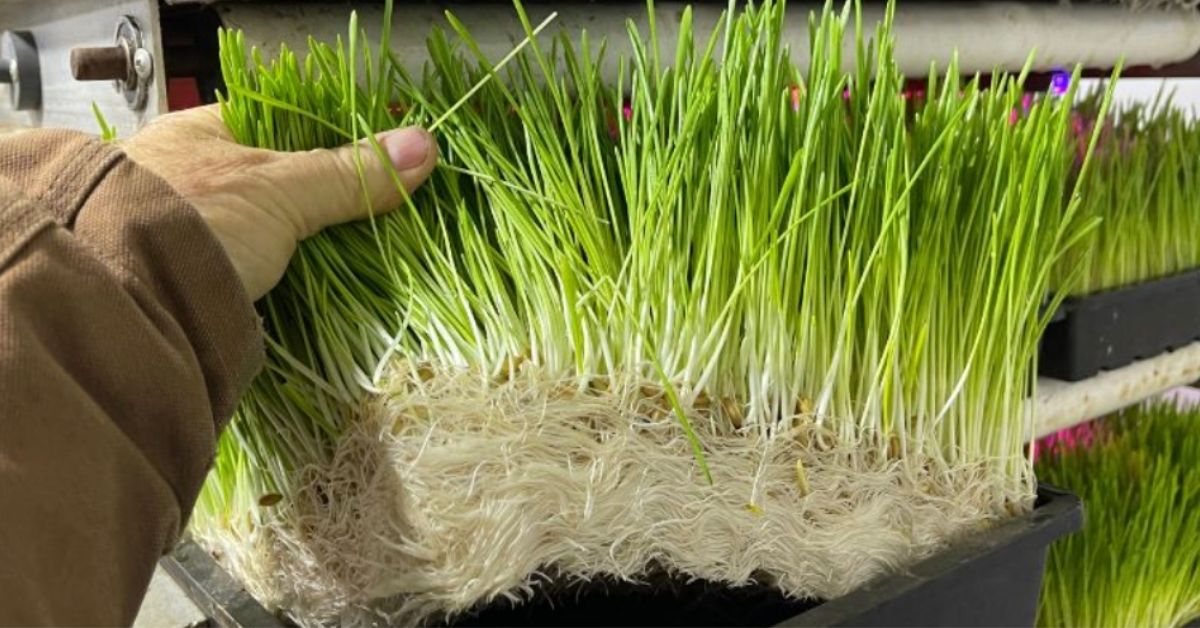
A close look at Sprouting Gear’s barley fodder—showing root structure, shoot density, and the vibrant growth achieved in just 9 days.
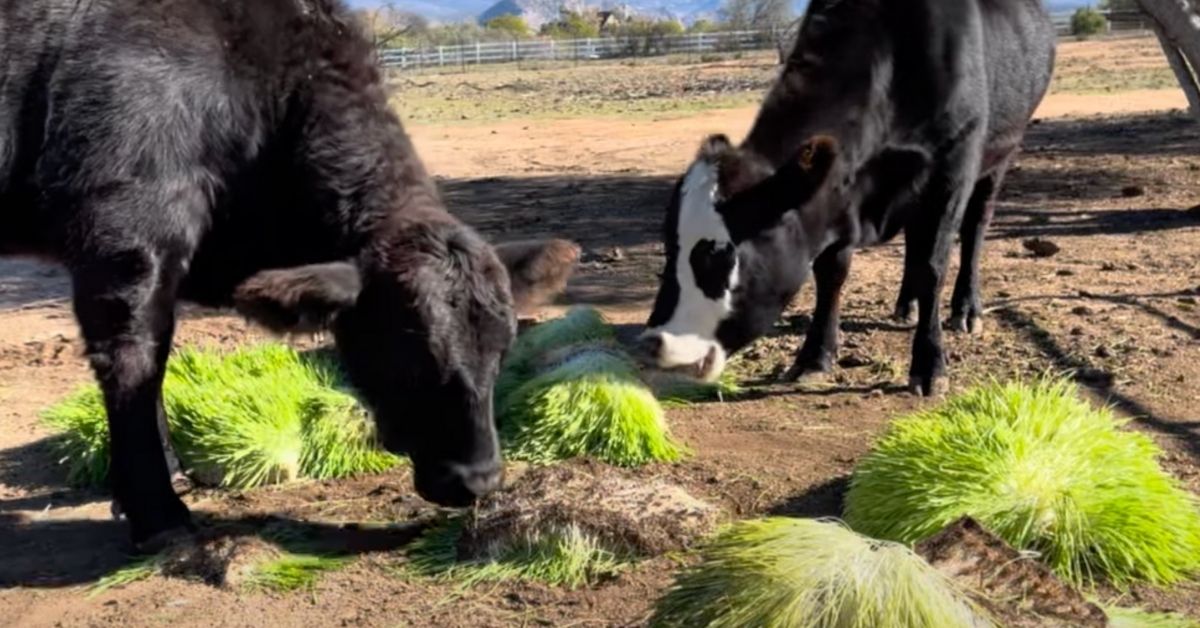
Cattle feed on fresh, nutrient-rich hydroponic barley fodder mats produced by Sprouting Gear's indoor system.
We aren't just saving water. We need to rebuild the foundation of how we feed the country.”
CA, UNITED STATES, May 13, 2026 /EINPresswire.com/ -- The latest water supply figures from the Bureau of Reclamation read like a disaster script. As of May 11, 2026, Lake Mead and Lake Powell—the lifelines of the American West—are at a staggering 30.9% and 23.5% capacity with the lowest mountain snowpack in recorded history. The emergency water release started on April 23rd from the Flaming Gorge reservoir is a desperate attempt to keep Lake Powell’s power turbines from hitting a "dead pool" standstill—the point where water levels drop too low to flow through the dam and generate power.— Paul Pluss
The historical formula for the American West—predictable snowpack and reliable reservoirs—has fundamentally collapsed. In 2026, the math no longer adds up.
While population growth and new industrial giants—such as the $44 billion semiconductor manufacturing hub in Texas and dozens of new data centers projected to evaporate tens of millions of gallons per day—are often blamed for the strain, the reality is far more grounded. Roughly 60% of all water pulled from the Colorado River and regional aquifers doesn't go to cities or microchips. It goes to cattle feed—specifically alfalfa and grass hay the #1 and #3 heaviest water usage crops. The valleys that feed our nation hold more senior water rights than cities with tens of millions of people that bloomed long after the water was originally allocated.
The Alfalfa Dilemma
Federal regulators are now staring down an October 1 "hard deadline" to reallocate water rights. Faced with a choice between drinking water for millions and flood-irrigating a field of alfalfa, the outcome is inevitable.
"Regulators will choose people and industry over the century-old allocation to alfalfa and grass hay and call it a “common-sense decision," says Paul Pluss, a veteran of the hydroponics industry who has spent the last decade tracking the intersection of hydrology and livestock feed. "When those cuts hit, hay prices won’t just rise—they will triple. We are looking at a structural collapse of the American beef and dairy industry."
In the 2022 drought, feed costs doubled, forcing a mass liquidation of herds, with 34.4 million cattle sent to slaughter—the highest in recent history. Pluss warns that what is coming later this year could be worse and far more permanent, as farmers lose the ability to maintain even their critical breeding stock.
A Solution in a Warehouse?
However, a potential workaround is quietly taking shape in the Southern San Joaquin Valley. Pluss and his team at Sprouting Gear Incorporated (SGI) are moving away from the traditional model of selling hydroponic equipment and are instead pitching a new industrial sector: Hydroponic Grown Feed Distribution Hubs.
The concept is a blueprint for a large-scale pilot facility near major feedyards in an area currently experiencing some of the most depleted aquifers in the state. Inside a massive 150,000-square-foot climate-controlled warehouse, SGI claims they can produce 71,000 tons of cattle feed per year, growing barley seed into nutritious roots and grass feed using 99% less water than traditional farming.
The Data is Striking
The efficiency gains of the SGI hydroponic model compared to traditional alfalfa farming represent a massive shift in resource management:
Traditional Alfalfa Farming: According to a UC Davis report, alfalfa requires approximately 570,000 gallons* of applied water per ton. This method results in high evaporation and rapid aquifer depletion.
SGI Hydroponic Method: Requires only 180 gallons of water per ton. This zero-evaporation, climate-controlled environment ensures maximum efficiency.
The Efficiency Gain: This represents a 99% water savings, with the potential to preserve 13 billion gallons of water annually from this one site.
The Economic Pivot
Critics have long argued that the high upfront costs and energy requirements of hydroponics were not economically viable, but Pluss maintains that the math of growing lettuce for humans versus growing feed for cattle is completely different. Cattle feed can be produced with the SGI system using 100 times less grow lighting energy per ton or calorie than vertical farming leafy greens.
In 2026, as hay costs are projected to double once again and water rights become more expensive than the land itself, the "economic gravity" has moved in favor of indoor feed production.
Rather than "fallowing"—the practice of paying farmers to stop farming to save water, which devastates local economies—SGI’s model focuses on local job creation and maintaining the agricultural supply chain. The project is currently navigating the final stages of institutional financing, seeking the last pieces of equity to prove that sustainable agriculture isn't just a moral imperative, but a profitable one.
As the Southwest enters its driest six months with record-low snowpack, this project represents more than just a pilot; it is a test case for whether the West can innovate its way out of a thirsty grave.
"We aren't just saving water," Pluss notes. "We need to rebuild the foundation of how we feed the country."
For more on the hydrological data behind this shift, watch the investigative short: The Water Crisis That Will Collapse America’s Beef Supply - View the Report
*Research Source: UC Davis: Alfalfa Irrigation in Arid Regions (PDF)
*Validating the numbers
Paul Pluss
Sprouting Gear Inc.
info@sproutinggear.com
Visit us on social media:
LinkedIn
Instagram
Facebook
YouTube
The Water Crisis That Will Collapse America's Beef Supply (And the Fix No One's Talking About)
Legal Disclaimer:
EIN Presswire provides this news content "as is" without warranty of any kind. We do not accept any responsibility or liability for the accuracy, content, images, videos, licenses, completeness, legality, or reliability of the information contained in this article. If you have any complaints or copyright issues related to this article, kindly contact the author above.
