

New wheat traits for improve yields in salt-affected soils
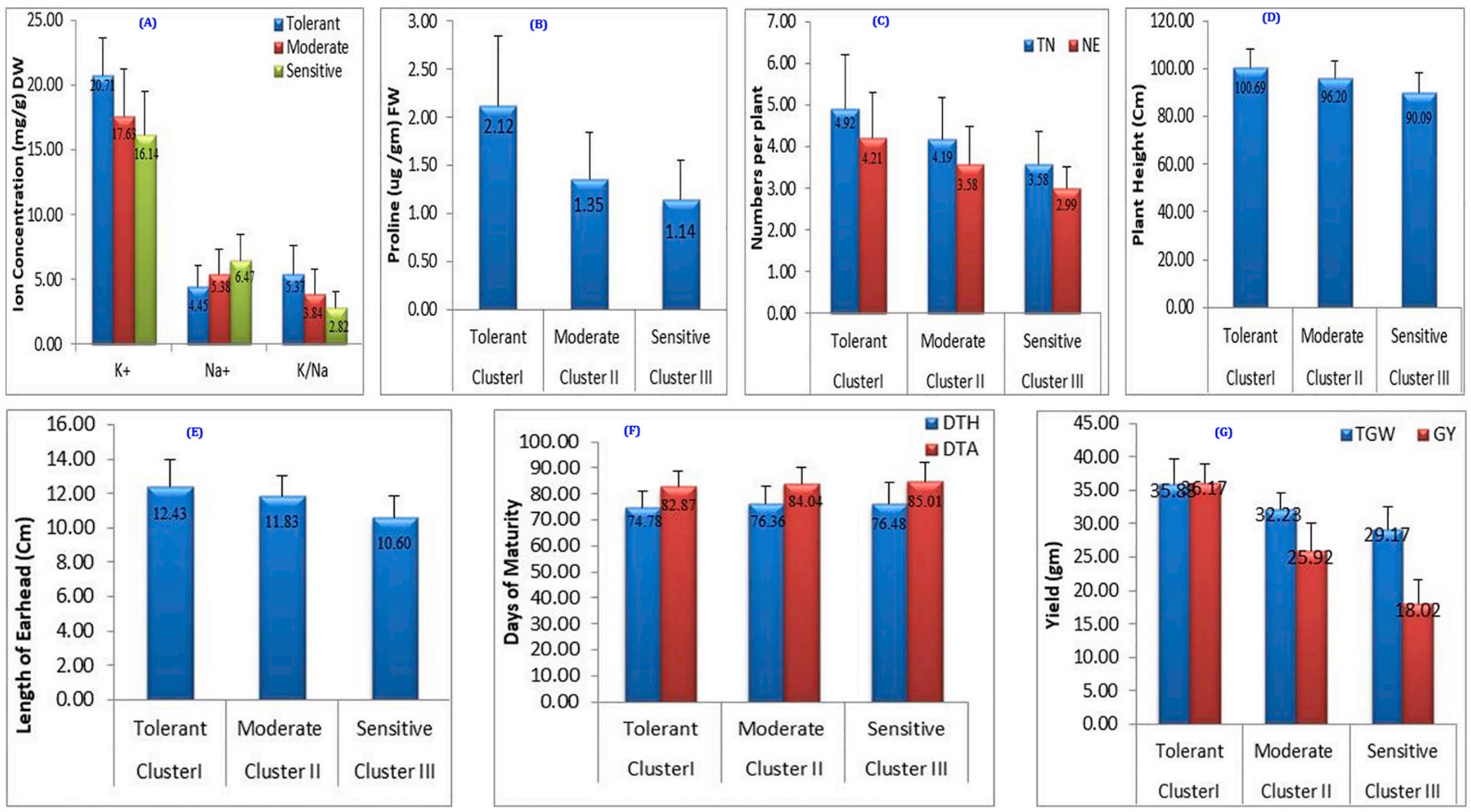
Salt-tolerant wheat lines maintain ionic balance and higher grain yield under sodic stress. Enhanced potassium retention, reduced sodium accumulation, and increased proline content contribute to improved stress resilience and productivity.
GA, UNITED STATES, July 2, 2026 /EINPresswire.com/ -- Researchers have identified key physiological and biochemical traits that help wheat maintain productivity under sodic (salt-affected) soil conditions. The study found that proline accumulation, potassium retention, and a favorable potassium-to-sodium ratio are strongly associated with grain yield under stress. These findings provide valuable tools for breeding salt-tolerant wheat varieties and improving food security in regions affected by soil salinity.
Soil salinity and sodicity are among the greatest challenges facing global agriculture, reducing crop productivity and threatening food security. Wheat, one of the world's most important staple crops, is particularly vulnerable to salt-affected soils. As climate change accelerates soil degradation and salinization, developing salt-tolerant wheat varieties has become a priority for sustainable agriculture.
In a new study published in Reproduction and Breeding, researchers evaluated a population of recombinant inbred lines (RILs) developed from a cross between Kharchia 65 (a salt-tolerant wheat variety) and HD 2009 (a salt-sensitive variety). The objective was to identify physiological and biochemical traits that contribute to wheat performance under sodic stress.
“We found that the tolerant parent, Kharchia 65, experienced only about an 11% reduction in grain yield under sodic conditions, whereas the sensitive parent HD 2009 showed a yield reduction of more than 44%,” shares corresponding author Ram Baran Singh. “Among the wheat lines studied, substantial variation in stress tolerance was observed, providing opportunities for breeders to select superior genotypes.”
Notably, wheat plants capable of maintaining higher potassium levels, lower sodium accumulation, and increased proline content produced significantly higher grain yields under sodic stress. Statistical analyses identified proline accumulation and potassium content as the most influential traits contributing to yield stability.
“Our findings demonstrate that proline content, potassium retention, and potassium-to-sodium balance are reliable indicators of salt tolerance in wheat,” says Singh. “These traits can serve as practical selection criteria for breeders aiming to develop wheat cultivars that perform better in salt-affected soils.”
Advanced analyses, including principal component analysis and cluster analysis, further confirmed that potassium content, potassium-to-sodium ratio, and proline accumulation were the major determinants of grain yield under sodic conditions. “Several highly tolerant recombinant inbred lines were also identified, providing valuable genetic resources for future wheat improvement programs,” adds Singh.
References
DOI
10.1016/j.repbre.2026.02.002
Original Source URL
https://doi.org/10.1016/j.repbre.2026.02.002
Funding information
The authors declare that no specific external funding was received for this study.
Lucy Wang
BioDesign Research
email us here
Legal Disclaimer:
EIN Presswire provides this news content "as is" without warranty of any kind. We do not accept any responsibility or liability for the accuracy, content, images, videos, licenses, completeness, legality, or reliability of the information contained in this article. If you have any complaints or copyright issues related to this article, kindly contact the author above.
